
Can a Nikon look like a Fuji? An AI says yes.
In my last post I wrote about borrowing a Fujifilm X-E5 to find out whether the grass was greener. My conclusion was that the film simulations are good but not better — just different — and that Nikon’s Flexible Picture Control on the Z5 II and Z6 III looked like it could produce richer results. I found a deal on a Z6 III, ordered it, and waited.
The camera arrived. First order of business: set up a custom Picture Control using Flexible Picture Control, aiming for the kind of rendering that made Fujifilm so appealing — vivid, slightly lifted greens, smooth shadows with a gentle glow, a look that feels alive without being garish. No post-processing, just the in-camera JPEG.
This is one of the first shots I took with it, a misty morning lane near home:
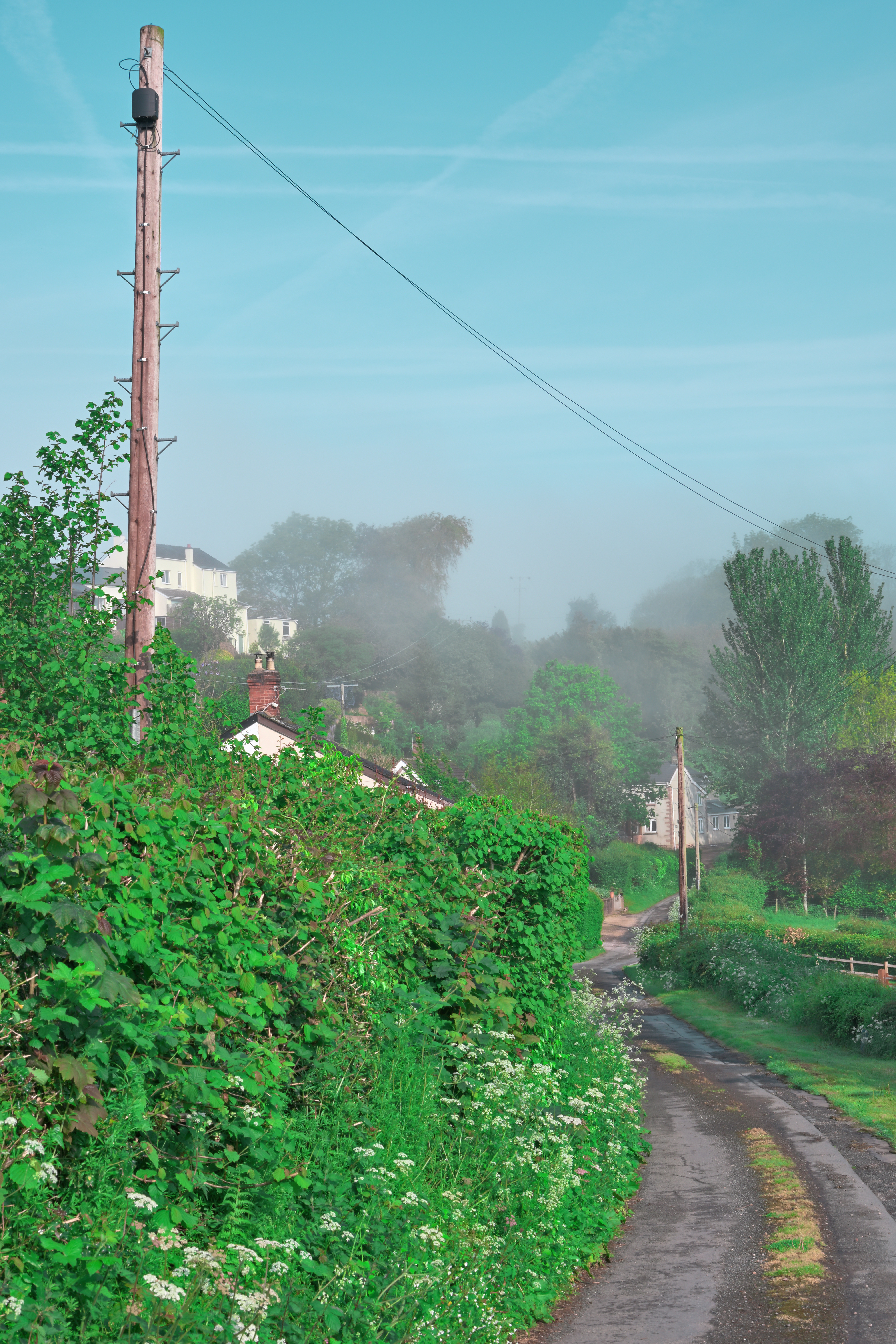
I was happy with how it looked, but I wanted a second opinion. I gave the image to both Claude and Google’s Gemini and asked each of them — ignoring the file metadata — what camera they thought had taken it. Both said Fujifilm. Google’s reasoning is here.
This seems to validate the theory. The Nikon, configured correctly, produces an image that reads as Fujifilm to an AI trained on millions of photographs.
This was a first attempt. The settings aren’t locked in and I’m going to keep iterating — different conditions, different subjects, different moods. The point of Flexible Picture Control is that you can do almost anything, and I’ve barely started exploring.